Waterunie (Farys and de WaterGroep), Flanders, Belgium – Operating treated water program with full-scale direct potable reuse and aquifer storage and recovery demonstration
Water scarcity occurs globally, even in regions such as Flanders, Belgium, where the discrepancy in water availability between the wet (autumn/winter) and dry period (spring/summer) is growing because of climate change. To cope with this challenge, the water utilities Farys and De Watergroep are collaborating as WATERUNIE, and exploring the potential to reuse wastewater treatment plant effluent as an alternative source for drinking water production, together with Aquafin.
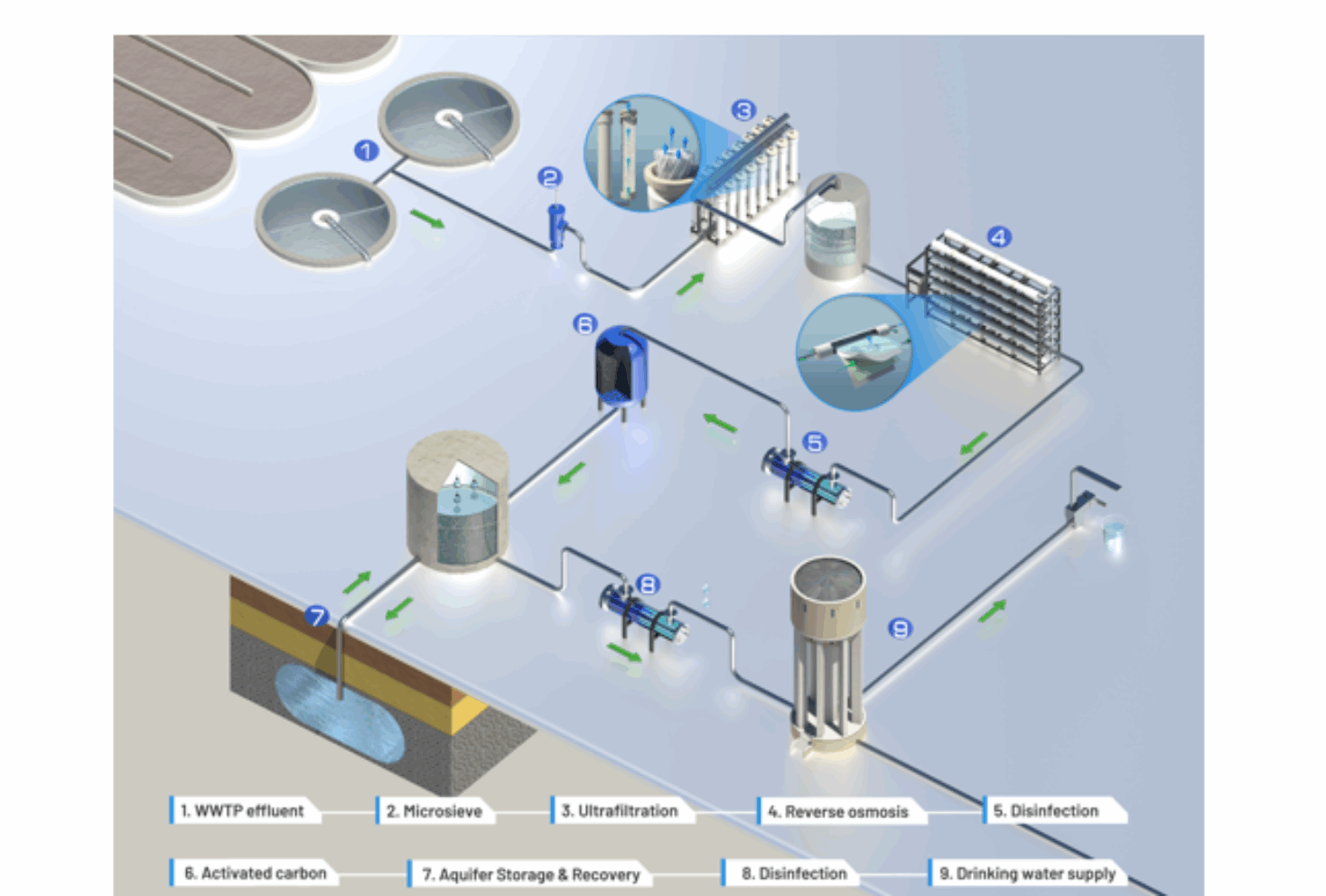
At the Aalst wastewater treatment plant (equivalent population 100,000 people) in Belgium, a new decentralised water reuse project has been developed by Waterunie in 2025, called Water Production Center or “WPC HOFSTADE (Aalst)”. An innovative multi-barrier treatment concept has been set up, which allows up to 850 million litres a year (634 million gallons a day, or 100,000 litres/hour) of direct potable reuse from the effluent.
The project is part of a program of the Flanders Environment Agency, funded by the “Blue Deal” of the Flemish Government. The overarching goal is increasing water supply security by direct potable reuse in Flanders, coupled to a demonstration project for indirect Aquifer Storage and Recovery (ASR). For the latter, part of the reuse water (up to 20,000 litres/hour) will be injected in the deep aquifer (between 140 and 220 metres depth) to explore the potential to create a strategic buffer or “winter-summer battery” for drinking water underground.
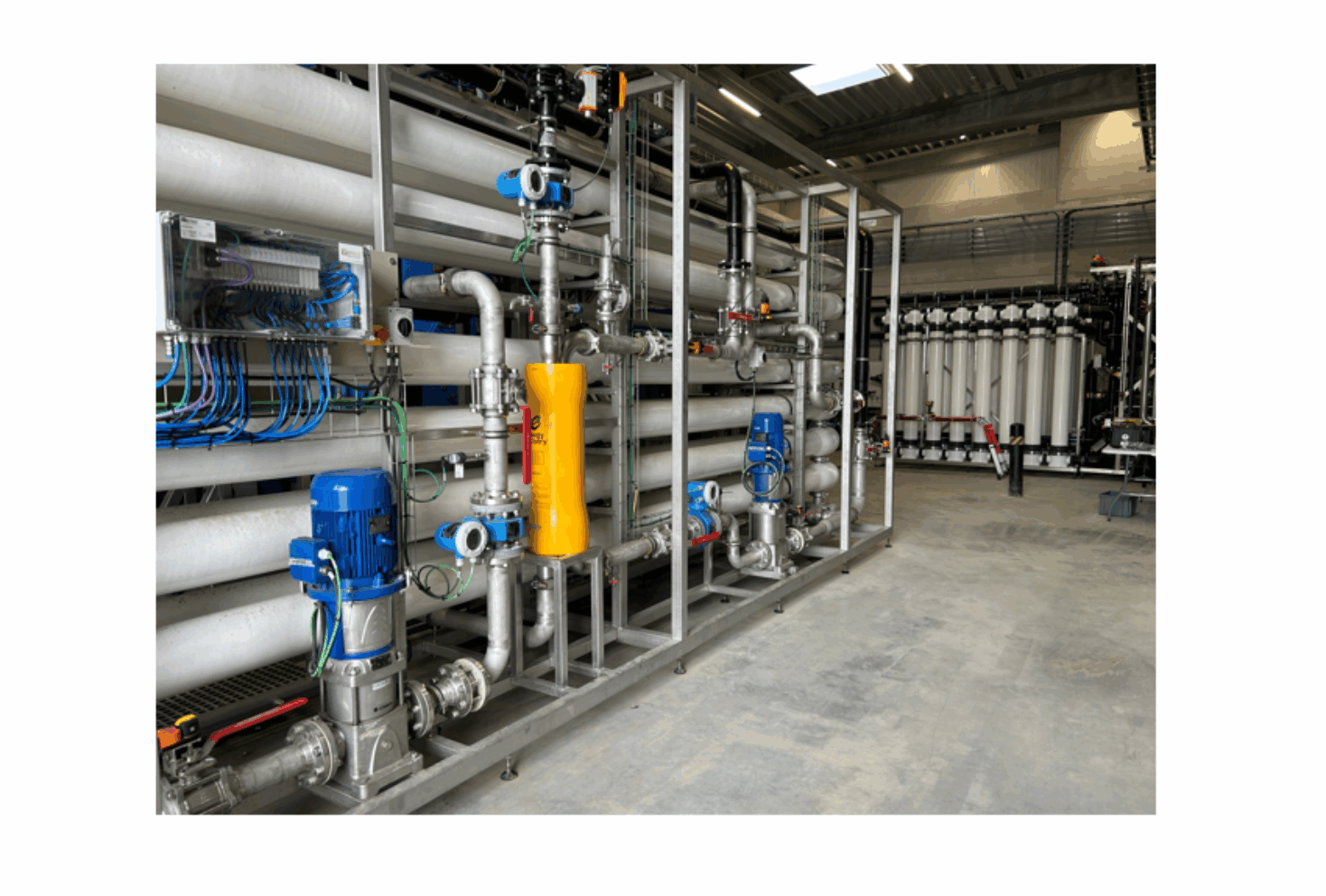
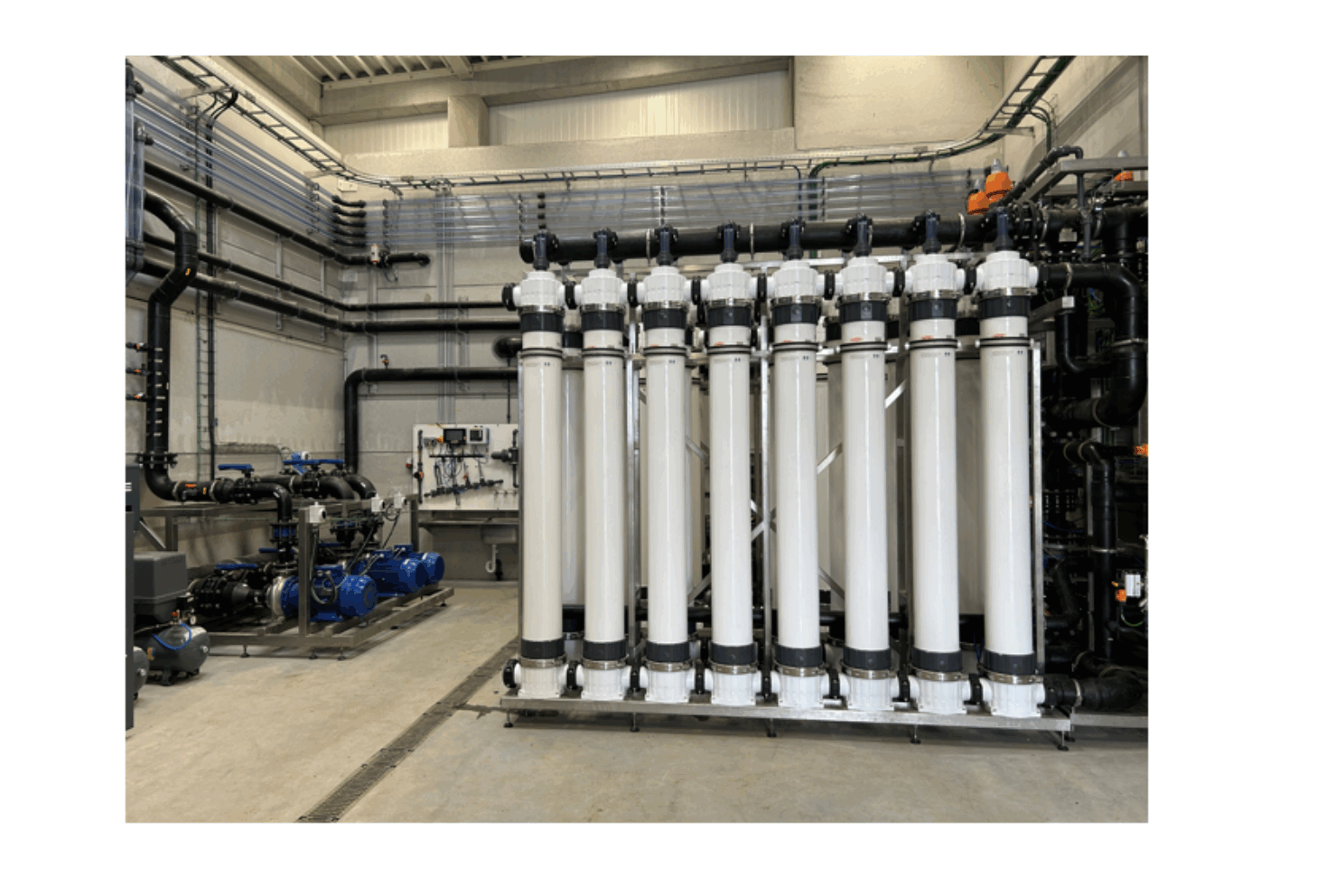
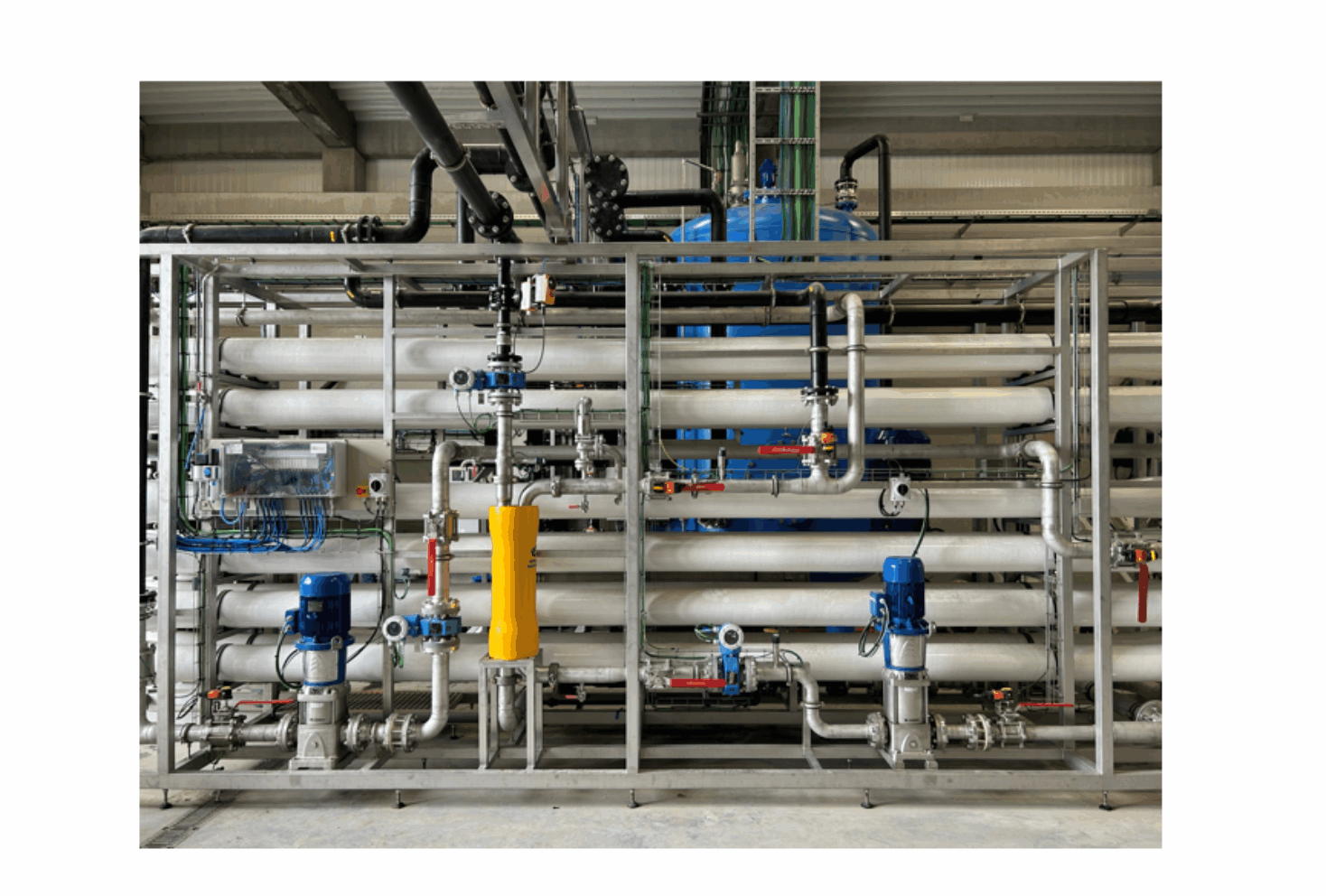
After prefiltration of the wastewater treatment plant effluent over self-cleaning mechanical sieves (in 2 steps: 500->300 microns (µm)), the water is treated by ultra filtration hollow fiber membranes with a pore size of 30 nanometres. The next step, reverse osmosis, is built in a 2-stage configuration using 8 inch brackish water membranes, with an integrated energy recovery. To increase the log reduction value of the multi-barrier, an extra ultra violet disinfection step is included, as well as an extra safety barrier for organic (micro)pollutants by means of activated carbon filtration.
UV disinfection, pH correction and post-chlorination of the water allows direct potable reuse by pumping the produced drinking water directly into Farys’ high-pressure water main nearby. This pipe is part of the large transport infrastructure, which is used to distribute the produced drinking water to the customers not only in the nearby City of Aalst, but throughout Flanders (serving a supply area of 812,451 people in theory). In-pipe mixing with other drinking water in the network allows remineralisation of the reuse water. The treatment scheme is designed according to the Water Safety Plan of Waterunie, and monitoring online and by periodic laboratory analyses. The final drinking water complies with the EU and Flemish drinking water standards.
To see 360 degree vision of the plant, visit this link.
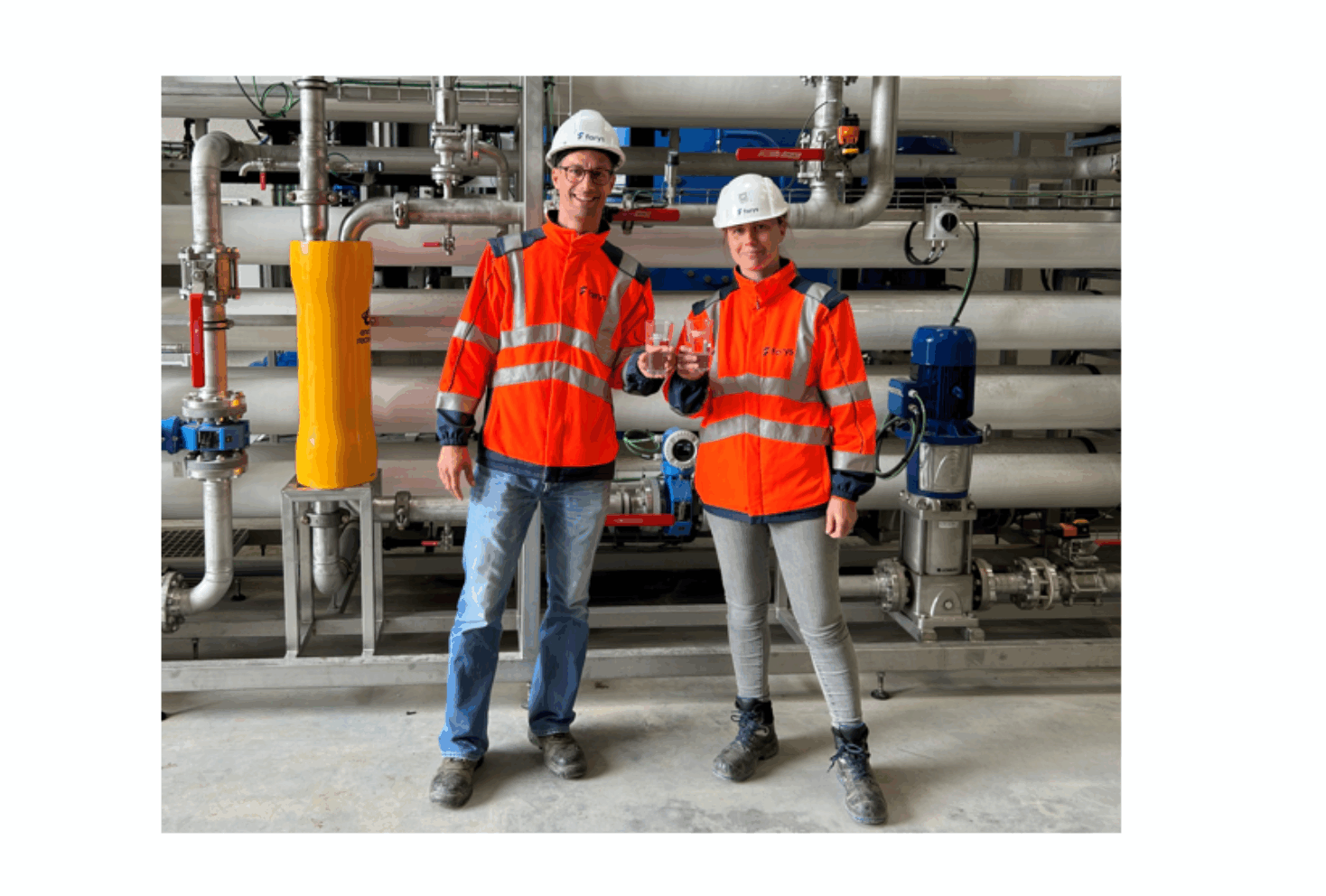
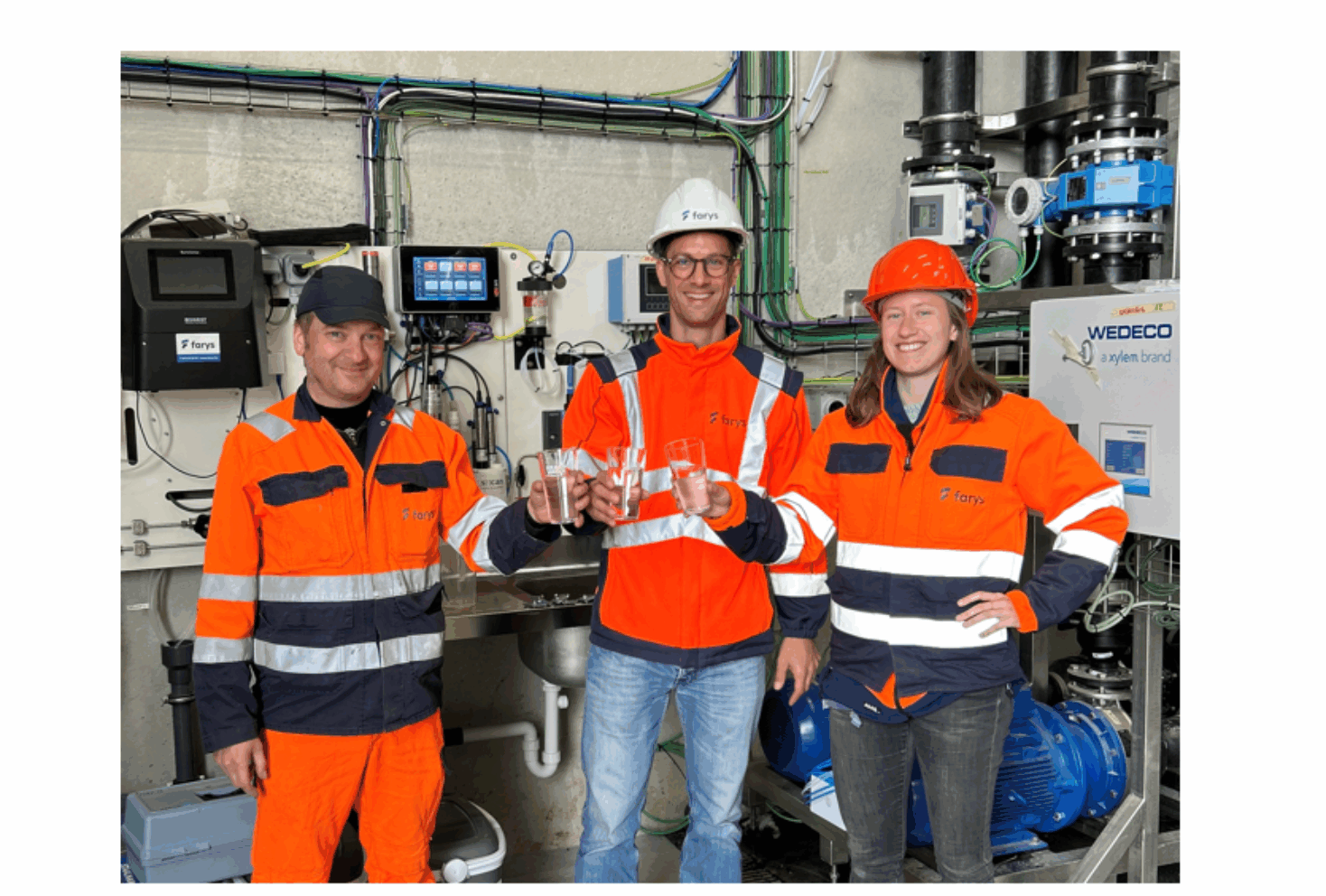
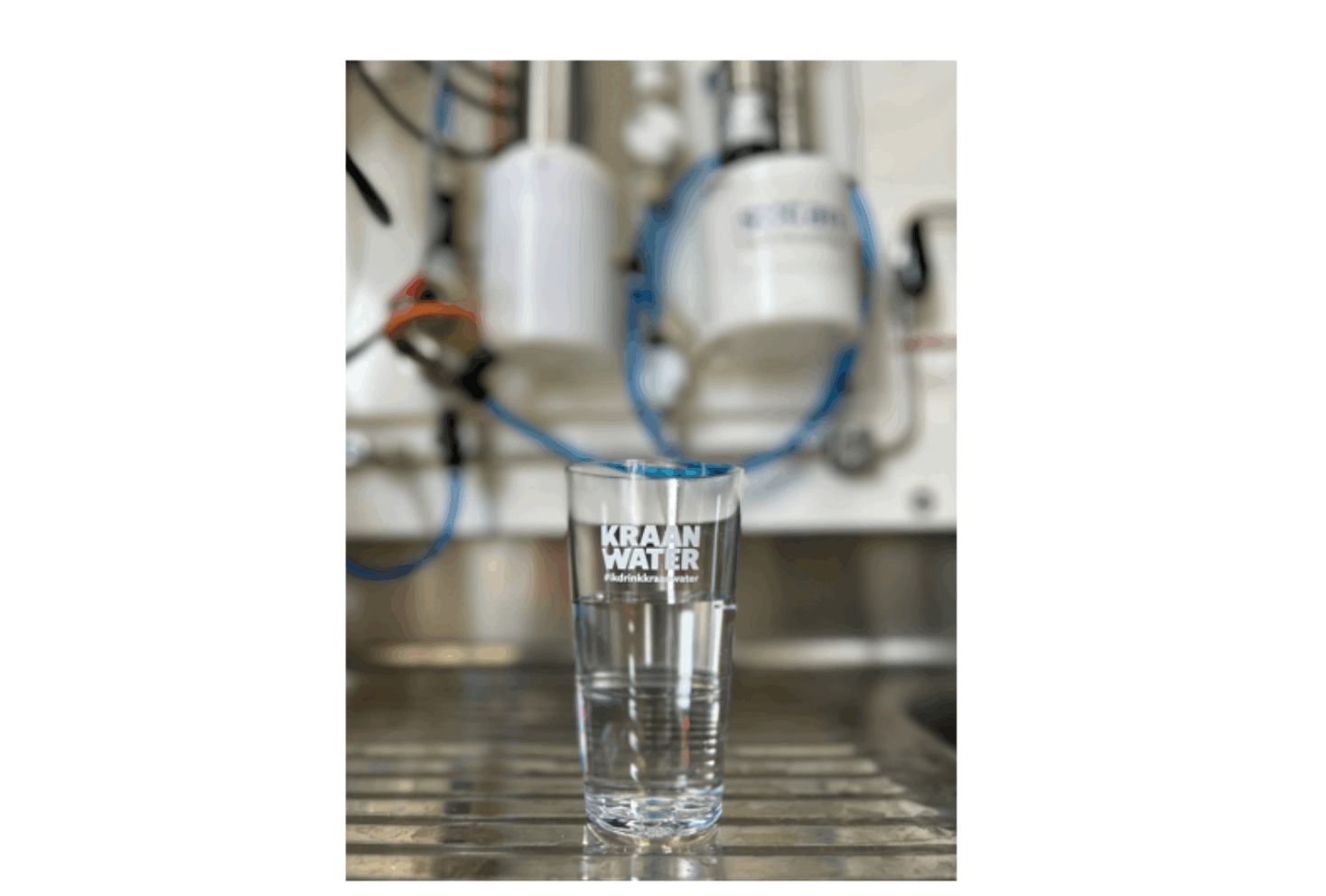
Pictures of the start-up of the direct potable reuse scheme in the Hofstade Water Production Centre (Aalst, Belgium) on 10 June 2025, courtesy of Bart de Gusseme, Waterunie.